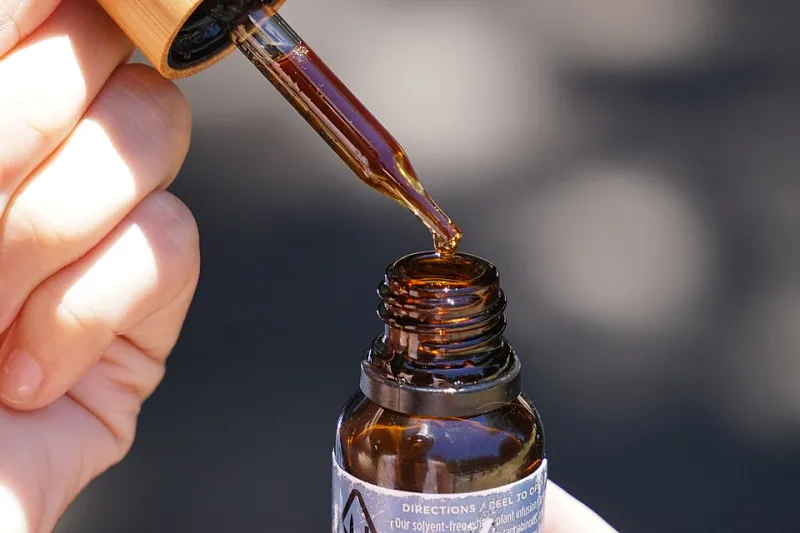
Swallow the Story: 20 UK CBD Capsules and the Oil Price Hiding Behind Them
Photo: User:JimOwensPMP, CC BY 3.0, via Wikimedia Commons
Let’s start with the obvious: a capsule is not a magic trick. It is a measured amount of CBD, usually blended with a filler, sealed inside a gelatin or plant-based shell, and sold in a bottle that looks more like a supplement than a tincture. That is the appeal. No dropper, no oil on the tongue, no squinting at a graduation mark. But in November 2026, with UK shelves still crowded and prices still spread wide, the capsule premium deserves a closer look.
For this check we took 20 UK CBD capsule products on sale this autumn, ranging from 10mg to 25mg per capsule, and paired each with the closest oil from the same brand or the nearest like-for-like strength and spectrum. We compared cost per 10mg, capsule count, serving size, CBD type, carrier or filler, and what the label said about daily use. Where a brand sold both formats, we used its own oil as the benchmark. Where it did not, we used a widely available oil with the same strength and spectrum. Prices were recorded in the first week of November 2026, including standard delivery where it was unavoidable.
The shell is not the expensive bit
The first thing to clear up is where the extra money goes. A hard capsule shell is cheap. So are most common fillers, such as cellulose or magnesium stearate. The real cost drivers are the same ones you see in oils: how much CBD is in the product, what type of extract is used, whether the brand has paid for testing and traceability, and how much margin sits on top.
That matters because capsules are often sold by count rather than strength. A bottle of 60 capsules sounds generous. A bottle of 30 capsules sounds stingy. But if the 60-cap bottle contains 10mg per capsule and the 30-cap bottle contains 20mg, both hold 600mg of CBD. The only real difference is how many times you swallow. This is the first place the capsule story gets fuzzy. Bottle count is a packaging decision, not a value signal.
What the 20 capsules showed us
Across the 20 products, the median capsule cost per 10mg was 58p. The paired oils came in at 41p per 10mg. That is a premium of roughly 41%. It was not uniform. A handful of capsules were priced almost level with their oil equivalent, usually where the brand sold a simple 10mg capsule and a matching 10ml oil. At the other end, some capsule products carried a premium of more than 80%, often with little on the label to explain why beyond the word convenient.
The sample split into three rough groups. The first group was made up of low-strength capsules, mostly 10mg, sold in 30- or 60-count bottles. These were the most likely to look cheap per bottle and expensive per dose. The second group was mid-strength, usually 15mg to 20mg, where the premium narrowed and the labels tended to be clearer about CBD type and daily serving. The third group was higher-strength capsules, 25mg and above, where the cost per 10mg sometimes matched or beat a comparable oil. That last group is worth remembering. Capsules are not automatically the expensive option; they are expensive when the strength is low and the bottle count is doing the selling.
Where the premium buys something real
There are fair reasons to pay more for a capsule. If you travel, commute, or share a kitchen with curious children, a sealed capsule is easier to carry and harder to spill. If you dislike the taste of hemp oil, that is not a small thing. If you want a dose that does not depend on how hard you squeeze a dropper, a capsule is doing actual work. A 20mg capsule is 20mg. You swallow it. The routine is simpler.
Capsules can also be kinder to people who find oil irritating on the tongue or awkward to measure at work. And for some, the psychological barrier is real: a capsule feels like a normal supplement, while a tincture feels like a hobby. That is not a reason to overpay, but it is a reason the format exists.
Where it buys a story
The less fair premium shows up when the capsule is just oil in a harder shell and the label leans on convenience to cover a weak dose. Watch for bottles that advertise a large capsule count but bury the per-capsule strength. Watch for filler lists that take up more space than the CBD information. Watch for phrases like high strength when the actual mg per capsule is modest. And watch for daily serving suggestions that quietly require two or three capsules, which can turn a 30-day bottle into a 10-day bottle.
One useful check is to ignore the front of the bottle and find two numbers: total CBD in the container and CBD per capsule. Divide the price by the total CBD, then multiply by 10. That gives you cost per 10mg. Do the same for the oil you are considering. If the capsule is 20% more, ask yourself whether the format is worth that to you. If it is 70% more, the shell is doing a lot of expensive work.
A five-point check before you pay
First, compare total CBD, not capsule count. Second, check whether the label gives mg per capsule clearly. Third, look at the filler list and shell type if you have dietary preferences. Fourth, confirm whether the daily serving is one capsule or more. Fifth, compare cost per 10mg with the brand’s own oil before assuming capsules are the premium choice.
The verdict
Capsules earn their place in a UK CBD routine when the dose is clear, the strength is sensible, and the premium is modest. They are a poor deal when a large bottle count distracts from a small amount of CBD per capsule. The hard shell is not the problem. The story around it often is. Zoom in on the mg, do the 10mg maths, and let the capsule justify its extra cost rather than assuming it has one.