The Dropper Doesn't Know Your Maths: 25 UK CBD Oils Put to the Millilitre Test
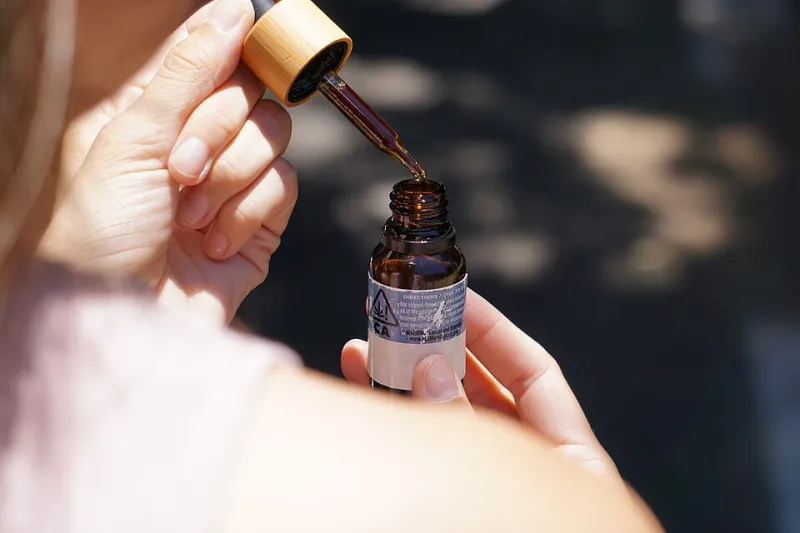
Photo: elsaolofsson, CC BY 2.0, via Wikimedia Commons
Most UK CBD oils arrive with a little glass dropper and a line in the instructions that goes something like: 1ml is roughly 20 drops. It is a tidy sentence. It is also doing a lot of unpaid labour. A drop is not a standard unit. It is a tiny physics event involving the tip of the dropper, the thickness of the oil, the angle of your hand and how hard you squeeze the bulb.
At CBD Zoom, we are not huge fans of assumptions wearing lab coats. So we bought 25 CBD oils from UK retailers, counted the drops from each bottle's own dropper and compared the kitchen reality with the label maths. The short version: one millilitre is still one millilitre, but a drop is a rumour.
What we actually did
We picked up 25 UK CBD oils across a spread of strengths, bottle sizes and price points. The sample included 10ml and 30ml bottles, oils from around 5mg per ml up to 50mg per ml, and prices from about £12 to £75. Nothing fancy: no brands were tipped off, and no one sent us a special dropper.
For each bottle, we counted full drops from its own dropper into a 1ml measuring cylinder until the oil reached the 1ml mark. We did it three times per bottle, at room temperature, with the same hand and the same don't-rush approach. We averaged the counts. We did not adjust our technique to make any bottle look better or worse.
This is not a laboratory-grade study. It is a shopper-grade reality check. And reality was messy.
The range was wider than the labels admit
Across the 25 bottles, the number of drops needed to make 1ml ran from 15 to 31. The average was 22. Only seven bottles landed within 10% of the familiar 20-drops-per-millilitre line. Eight needed more than 25 drops. Four needed fewer than 18.
That is not a small difference. If you are dosing by drop count, a bottle that gives 30 drops per ml is delivering roughly a third less oil per drop than a bottle that gives 20. A bottle that gives 15 drops per ml is delivering about a third more.
The pattern was not random. Thin oils and narrow dropper tips pushed the count up. Thick full-spectrum oils and wide tips pushed it down. Temperature mattered too. A cold kitchen made oils slower and drops heavier. A warm windowsill made them runnier. The same bottle could shift by a couple of drops per ml depending on the day.
Why one millilitre is a moveable feast
A dropper is not a measuring spoon. It is a delivery system with opinions. The tip diameter controls how much oil gathers before gravity wins. The bottle neck controls how much air gets in. The viscosity of the oil controls how quickly it lets go. Even the angle you hold the bottle changes the size of the drop.
Most labels give a drop count because it is friendlier than asking shoppers to buy a syringe. That is fair. But friendly is not the same as accurate. If your CBD oil says four drops equals 10mg, that instruction is only true if the dropper is delivering the drop size the brand assumed. Our count suggests that assumption is often a bit off.
The label maths vs the kitchen maths
Here is a simple example. Take a 10ml bottle with 500mg of CBD. That is 50mg per ml. If the label says 20 drops per ml, then a 10mg dose should be 0.2ml, or four drops. Nice and easy.
Now suppose the bottle actually gives 30 drops per ml. Four drops is only 0.133ml. At 50mg per ml, that is about 6.7mg, not 10mg. To get the 10mg you thought you were taking, you would need six drops. If the bottle gives 15 drops per ml, four drops is 0.267ml, or about 13.3mg. Same label, same oil strength, very different dose.
This is where the cost-per-10mg conversation gets interesting. If a bottle costs £30 for 500mg, the oil itself is 60p per 10mg. The dropper does not change that. What changes is how many drops you need to get the 10mg you paid for. A bottle that needs six drops per dose is not more expensive per milligram, but it is more faff. And if you trust the label's drop count, you may be underdosing without realising it.
So is a cheaper bottle quietly stingier at the dropper? Not in a conspiracy way. We did not find that cheaper bottles consistently had smaller or wider droppers. The bigger issue was label drift: the dropper and the instruction sheet were not always on speaking terms.
What this means for UK shoppers
If you measure your CBD in millilitres, you are mostly fine. A 1ml oral syringe from a pharmacy costs very little, and it takes the guesswork out of the equation. If you dose by drops, though, you need to calibrate your own bottle rather than trust the average on the label.
Our advice is simple. Count the drops it takes to reach 1ml on your bottle. Do it once, write the number on the label and use that number for your dose maths. If your bottle says four drops equals 10mg but your count says 30 drops per ml, you know to use six drops for that 10mg. If your count says 15 drops per ml, you know three drops is closer to 10mg.
Also, keep the bottle upright and at room temperature where you can. Shake according to the label if it asks you to. And do not assume that the dropper from one brand will behave like the dropper from another. They are not interchangeable, even when the bottles look similar.
The bottom line
One millilitre is one millilitre. That part is solid. The number of drops that make it is not. Our 25-bottle test found a range wide enough to turn a label's 10mg dose into something closer to 7mg or 13mg depending on the dropper.
That does not mean UK CBD oils are dodgy. It means drops are a casual unit, and casual units deserve a second look. If you want to compare bottles fairly, compare price per milligram and measure in millilitres. If you want to dose by drops, spend two minutes counting your own. Your dropper does not know your maths. You have to do that bit.