The 3.5p Question: How to Read a UK CBD Oil Label Like an Accountant
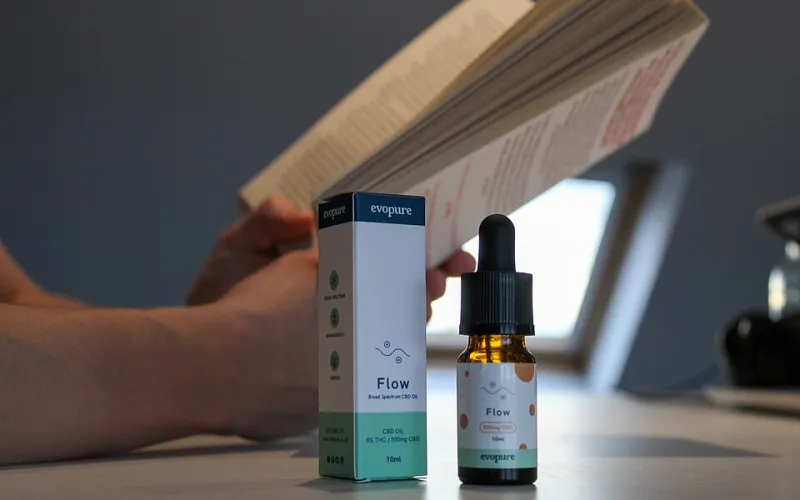
Photo: Evopure, CC BY-SA 2.0, via Wikimedia Commons
The £35 bottle can be the cheaper one
Walk into a UK CBD shop and you will see two bottles side by side. One is £35, one is £20. Most people reach for the £20 bottle. But if the £35 bottle contains 1000mg and the £20 bottle contains 500mg, the £35 bottle costs 3.5p per milligram. The £20 bottle costs 4p per milligram. The expensive-looking bottle is actually the better value.
That is the whole idea behind the CBD Zoom milligram maths test. Headline price is not value. Value is what you get per milligram, per serving and per batch certificate. Here is how to work it out in a couple of minutes.
Step 1: Find total milligrams, not just percentage
CBD oil labels in the UK often lead with a percentage. A 10ml bottle at 10% contains 1000mg of CBD. The quick formula is bottle size in ml multiplied by the percentage, then multiplied by 10. So 10ml x 10% x 10 = 1000mg. A 30ml bottle at 5% is 1500mg. A 10ml bottle at 5% is 500mg.
Some labels skip the percentage and state the total milligrams, which is helpful. Others state milligrams per millilitre. If a bottle says 50mg/ml and it is 10ml, that is 500mg total. Do not assume the big number on the front is the total. A '1000mg' claim can mean 1000mg in the bottle or 1000mg per 10ml, and those are very different things.
Step 2: Do the 3.5p test
Cost per milligram is simple: price divided by total milligrams. Use pence rather than pounds to avoid decimal confusion.
- £35 divided by 1000mg = 3.5p per mg
- £20 divided by 500mg = 4.0p per mg
- £45 divided by 1500mg = 3.0p per mg
- £18 divided by 300mg = 6.0p per mg
- £60 divided by 1000mg = 6.0p per mg
As a rough UK guide, under 5p per milligram is decent for an everyday oil. Five to eight pence is mid-range. Above 10p needs a reason: full spectrum, organic certification, a particularly detailed COA or a format that costs more to make. It is not automatically bad, but you should know what you are paying for.
Step 3: Cost per serving is the number you actually swallow
A bottle is not a month. It is a number of milligrams. If you take 10mg a day, a 500mg bottle lasts 50 days. If you take 30mg a day, it lasts about 16 days. That changes the value calculation.
Serving size matters too. Bottle A is 10ml at 10%, so 100mg/ml. A 0.1ml serving gives you 10mg. The bottle has 100 servings, and at £35 that is 35p per 10mg serving. Bottle B is 10ml at 5%, so 50mg/ml. You need 0.2ml for a 10mg serving. The bottle has 50 servings, and at £20 that is 40p per 10mg serving. The £35 bottle wins again.
This is where cheap bottles can become expensive. If you need to draw 0.2ml or 0.3ml to get your dose, you may use more than you expect. Pipette accuracy is not perfect. A stronger bottle can be easier to dose and last longer, even when the sticker price is higher.
Step 4: The batch certificate is part of the price
A certificate of analysis, or COA, is the lab report for a specific batch. It should show the cannabinoid profile, THC level, pesticides, heavy metals and microbiology. In the UK, reputable brands should be able to send you a COA for the batch you are holding. A QR code should go to that batch, not a generic 'lab tested' page.
If a brand cannot show a batch COA, score it down. You are paying for a product you cannot verify. The UK Novel Foods rules and the FSA list are useful context, but they do not replace a batch-specific lab report. Think of the COA as part of the product, not a bonus extra.
Step 5: Full spectrum, broad spectrum and isolate in plain English
Full spectrum means the extract contains a range of cannabinoids from the hemp plant, including trace THC within the UK legal limit. Broad spectrum means the THC has been removed but other cannabinoids are kept. Isolate means it is CBD only.
None of these is automatically better. Full spectrum appeals to people who want the whole plant profile. Broad spectrum suits people who want to avoid THC. Isolate gives the clearest single-cannabinoid dose. The important thing is honesty: if a label says full spectrum but the COA shows only CBD, walk away. Spectrum is about what is in the bottle, not how strong it is.
The CBD Zoom scoring framework
Use this quick score out of 25 when you are comparing two bottles on your phone.
| Criterion | What to check | Score |
|---|---|---|
| Value | Cost per 10mg serving | 1-5 |
| Dose clarity | mg per ml and mg per serving on the label | 1-5 |
| Lab transparency | Batch-specific COA with QR or download | 1-5 |
| Format | Carrier oil, pipette, flavour, bottle size | 1-5 |
| Spectrum honesty | Label matches the COA | 1-5 |
A strong everyday oil might score 23 out of 25. A cheap bottle with no COA and a vague label might score 14. That is the point of the framework: it stops a low price from winning by default.
Three traps that make a cheap bottle expensive
First, the tiny bottle with a big milligram claim. A 10ml bottle at 1000mg is 100mg/ml, which is strong. A 30ml bottle at 1000mg is only 33mg/ml, so you need more oil per serving. The cost per milligram may be similar, but the bottle empties faster.
Second, sample bundles. They are useful for trying flavours, but the cost per milligram is often high because you are paying for packaging and novelty. Third, short-dated Black Friday deals. If the best-before date is close, you may waste more than you save. Check the date before you stock up.
Your two-minute shop calculation
Find the total milligrams. Divide the price by the milligrams to get pence per mg. Check the serving size and work out cost per 10mg. Look for a batch COA. Then ask whether the label is honest about spectrum. If two bottles are within a penny per milligram, choose the one with the better paperwork and the dose you can actually measure. That is how a £35 bottle beats a £20 one without any marketing magic.