Full Spectrum or Full Story? Auditing UK CBD Lab Reports Against the Marketing
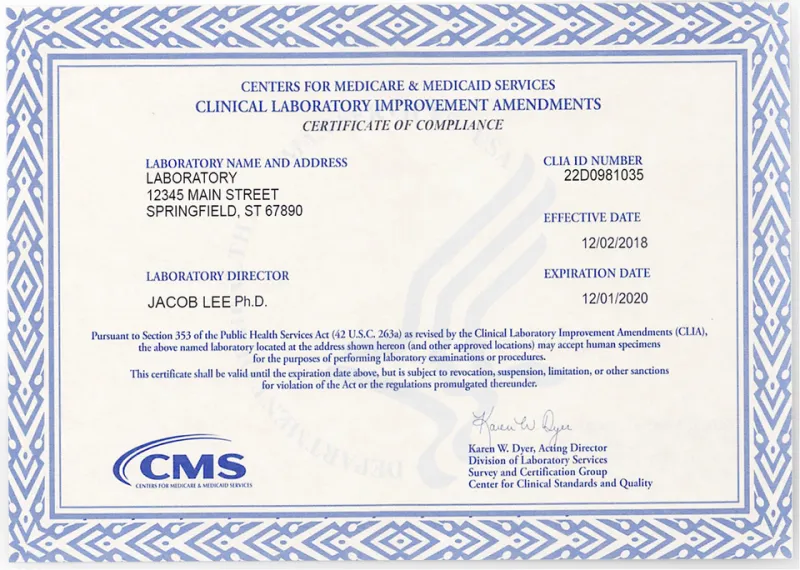
Photo: Centers for Medicare & Medicaid Services, Public domain, via Wikimedia Commons
There is a phrase that appears on almost every CBD product page in Britain, usually somewhere near a photograph of a hemp field at golden hour: the entourage effect.
The idea is that CBD works better alongside the other compounds in the plant — minor cannabinoids like CBG and CBN, plus terpenes, the aromatic molecules that give cannabis its smell. It's a genuinely interesting hypothesis. It's also, in human terms, still largely unproven.
Which wouldn't matter much, except that the entourage effect has become the main justification for charging £60 for 10ml of oil. So we did some reading. Here's what the paperwork actually shows.
First, the three words mean specific things
Isolate — pure CBD, nothing else. Easy to verify, easy to test, cheap to make.
Broad spectrum — CBD plus other cannabinoids, with THC removed or reduced to trace levels. The awkward middle child, and the one with the least agreed definition.
Full spectrum — the whole extract, minor cannabinoids and terpenes included, usually with THC present below the UK limit.
Here's the catch: none of these terms has a legal definition in the UK for consumer CBD. They're industry convention, not statute. A brand can call something full spectrum and face no consequence other than a bad review — assuming anyone checks.
What a certificate of analysis can and can't tell you
A COA is a lab report. The good ones cover:
- Cannabinoid potency — CBD, CBDa, CBG, CBN, CBC, THC, THCa, and the rest, each with a percentage or mg/ml figure.
- Terpenes — a panel of individual terpenes with quantities, or a total terpene percentage.
- Contaminants — heavy metals, pesticides, residual solvents, microbials, mycotoxins.
- Method and limit of quantification (LoQ) — the smallest amount the lab can reliably detect.
A COA cannot tell you whether the entourage effect is real for you. It cannot tell you whether the oil works. What it can do is confirm or contradict the specific factual claims on the bottle.
That's a narrow job. It's also the only job we can reasonably ask it to do.
The claims we checked, and how they held up
'Full spectrum'
A genuine full-spectrum COA should show more than CBD. We'd expect to see at least a few minor cannabinoids — CBG, CBC, CBN, maybe CBDA — at low but non-zero levels, and ideally a terpene panel.
The common failure mode is a 'full spectrum' product whose COA shows CBD at 99% of the cannabinoid total with everything else below the detection limit. That's an isolate wearing a costume. It might be a lovely oil. It is not full spectrum in any meaningful sense.
'Broad spectrum'
This one is genuinely slippery, because broad spectrum sits between two poles and can drift towards either. Some broad-spectrum oils show a healthy spread of minors. Others look indistinguishable from isolate in the lab.
If a brand charges full-spectrum prices for broad spectrum, ask what was actually removed and whether the removal process left anything behind. A decent brand will have an answer.
'Terpene-rich'
This is the claim most often made without evidence. Terpene testing is expensive and it's a separate panel from cannabinoid testing — many labs don't offer it as standard, so plenty of brands simply skip it.
That's understandable commercially. It's not understandable to describe an oil as terpene-rich, or to name specific terpenes on the product page, without a terpene panel to point to. If the words 'myrcene' and 'limonene' appear in the marketing and nowhere in the lab report, you're being sold a story.
'0.0% THC'
Read the LoQ. A lab that can detect THC down to 0.01% reporting 'not detected' is telling you something useful. A lab reporting 0.0% without stating its detection limit is telling you very little. Neither is the same as a guarantee, but one is a much stronger statement than the other.
'Lab tested'
Everything is lab tested for something. The question is what, by whom, on which batch, and when. A COA covering only potency from an unaccredited in-house lab is a different document from a full contaminant panel from an accredited third party.
Where labelling gets fuzzy
A few patterns we kept running into:
- The undated COA. A report with no batch number and no test date proves that a product was tested once. It says nothing about the bottle in your hand.
- The mismatched batch. Bottle code says one thing, the COA's batch reference says another. Sometimes admin. Sometimes not.
- Milligram maths that doesn't add up. If a 10ml bottle claims 1000mg of CBD and the COA reports 10% CBD by volume, those two statements should reconcile. When they don't, someone's rounding — or someone's guessing.
- Cannabinoid totals above 100%. Rare, but it happens, and it's a sign nobody proofread the report.
- 'Hemp extract' instead of 'CBD' on the ingredients list, with the actual milligram figure buried in a graphic.
What you can genuinely verify in five minutes
- Find the batch number on the bottle or box. It's usually near the best-before date.
- Search the brand's COA page for that exact code. Not a product page — the batch.
- Check the test date falls after the batch was made, not months before.
- Look at the cannabinoid table. If it claims full spectrum, are there minors present above the LoQ?
- Look for a terpene panel if terpenes are mentioned anywhere in the marketing.
- Check the lab name and whether it holds recognised accreditation.
If a brand fails step two, that's not proof of anything bad. It's proof they haven't given you the means to check, which is its own kind of answer.
Claims that deserve the most scepticism, ranked
- 'Terpene-rich' with no terpene data. By a distance the most common unsupported claim.
- 'Full spectrum' with no minor cannabinoids on the COA. Usually an isolate with good copywriting.
- The entourage effect stated as settled science. It's a promising hypothesis with a thin human evidence base. Honest brands say 'may support'.
- 'Clinically proven'. Almost never accompanied by a citation, and CBD isn't licensed as a medicine in the UK outside specific prescription products.
- '0.0% THC' with no detection limit stated.
The fair defence
It would be unfair to leave it there. Terpene panels cost money, and a small British brand shifting a few hundred bottles a month can't always justify the spend. Novel food authorisation has also been a slow, expensive grind for the whole sector, and plenty of reputable operators have spent years and serious money on compliance while dodging a lot of nonsense from cowboys.
The point isn't that everyone's lying. It's that 'full spectrum' and 'terpene-rich' have become free words — costless to type, expensive to verify — and the burden of scepticism sits with the shopper by default.
The bottom line
The entourage effect might well be real. But you can't taste it, and you certainly can't read it off a hemp field photograph. What you can read is a batch report — and if a brand is making a specific chemical claim about its oil, that report is where the claim either stands up or quietly falls over.
Zoom in on the numbers. The story is usually in the footnotes.