Registered, Pending, or Just Confident? 30 UK CBD Oils Checked Against the FSA List
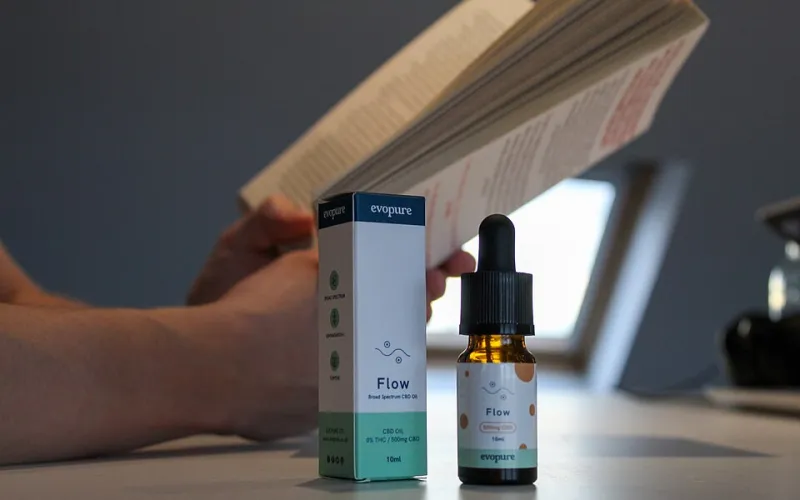
Photo: Evopure, CC BY-SA 2.0, via Wikimedia Commons
The FSA novel food register is not a best-buy list. It is not a quality badge. It is not even a guarantee that the oil in your hand has been tested, tasted, or ticked off by anyone in a white coat. What it is, roughly, is a public record of which CBD products have had an application submitted to be sold legally in the UK. And after spending a week with 30 bottles from shop shelves and online baskets, I can tell you that the gap between being on that register and simply sounding like you are is wider than most labels admit.
What we actually did
We picked 30 CBD oils that a normal shopper could buy in the UK in 2026 — big names, small names, pharmacy brands, health-shop regulars, and a few that turned up in my Instagram feed with suspicious enthusiasm. For each one we searched the FSA's novel food list by product name, brand, and company. Then we looked at the bottle, the website, and the brand's own wording. No lab tests. No taste test. Just a straightforward paper chase.
The results split into three rough groups. About a third had a clear, findable entry with a matching product name and an application reference you could point to. Another third sat in a murky middle: a parent company was on the list, or the brand said something like “fully compliant” without naming an application. And the last third? Nothing obvious. No entry I could find, no reference on the pack, and no clear answer on the website.
The three labels you will see
“On the register”
This is the cleanest position. The product or brand appears on the FSA list, and the company can usually give you an application number if you ask. It does not mean the product is approved. The FSA register is a list of applications, not a list of winners. But it does mean someone has put their hand up and started the process, which is more than some brands can say.
“Compliant”
This is the word that does the most heavy lifting in UK CBD marketing. I found it on bottles, banners, and FAQ pages. Sometimes it meant the company was on the register under a different trading name. Sometimes it meant they believed their product was compliant. Sometimes it meant nothing you could verify without a phone call. Treat “compliant” as a claim, not a fact. It is not the same as “registered” and it is definitely not the same as “approved”.
“We follow all UK regulations”
Lovely. So does everyone who has ever written a website. This phrase tells you nothing specific. It is the CBD equivalent of “bank-grade security” on a toothbrush website. It may be true, but it is not a paper trail.
What the register does not prove
This is the bit I wish more shoppers knew. The FSA list does not tell you whether the oil contains the amount of CBD printed on the label. It does not tell you whether the batch was tested for THC, pesticides, or heavy metals. It does not tell you whether the flavour is pleasant or the dropper is any good. It is an administrative checkpoint, not a consumer review.
That means a product on the register can still be a poor buy, and a product not yet on the register can still be a decent oil — though if it is being sold as a novel food without an application, that is a different conversation about legality and risk. The register is one clue, not the whole case.
The marketing language to slow down for
A few phrases made me reach for the search bar every time. “FSA approved” is a red flag because the FSA does not approve CBD oils in the way the phrase suggests. “Novel food certified” sounds official but is not a standard term. “Registered formula” could mean almost anything. And “pending application” is fine if the brand can tell you the application number and the company name it was submitted under. If they cannot, pending is just a word.
A simple checklist before you buy
- Search the exact product name and brand on the FSA novel food register. Do not stop at the homepage.
- Check the company name on the bottle against the name on the register entry. Trading names change, but they should be able to explain the link.
- Look for an application reference on the pack or the product page. If it is not there, ask the brand directly.
- Treat “compliant” and “approved” as marketing until you see a register entry or a reference number.
- Remember the register is about applications, not quality. Check lab reports separately if dose and purity matter to you.
The bottom line
After 30 bottles, the lesson is not that the register is useless. It is that the register is narrow. It tells you whether a brand has started a particular paperwork journey, and that is worth knowing. But it will not zoom in on the oil itself. For that you still need the label, the lab report, and a brand that answers a straight question without hiding behind the word “compliant”.
If a company can point you to its entry in under a minute, that is a good sign. If it sends you a paragraph about being “fully compliant” and a link to a blog post, keep your wallet closed a little longer.