Thirty Bottles, Three Dates: What UK CBD Oils Actually Tell You About Their Age
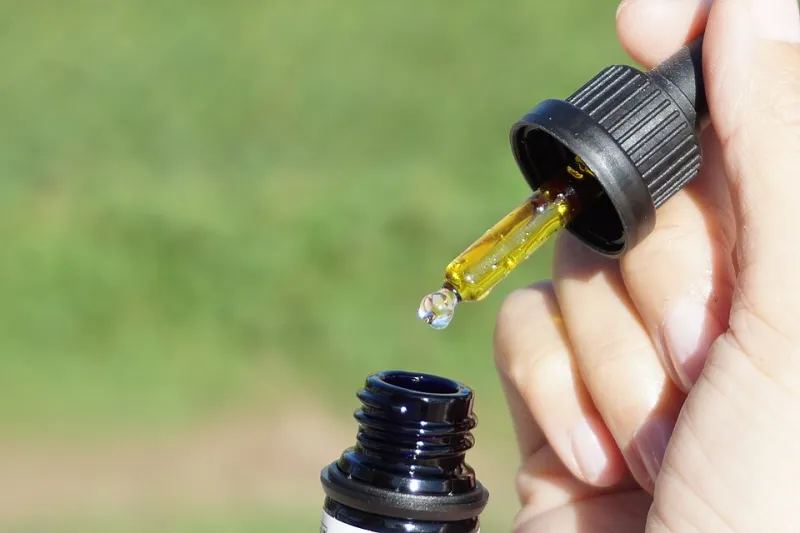
Photo: Elsa Olofsson, CC BY 2.0, via Wikimedia Commons
There is a strange thing about buying CBD oil in the UK: most of us spend ten minutes comparing milligrams and price, then never once ask how old the stuff is. Fair enough — freshness is invisible until it isn't. So we lined up 30 CBD oils from 30 different UK sellers, magnifying glass out, and went looking for three small pieces of information that should be on every bottle: when it was made, when it expires, and which batch it came from.
What we found was less a scandal than a spectrum. A handful of brands are genuinely open. A larger group is half-open. And a stubborn tail tells you almost nothing at all.
What we were looking for
Three things, in order of usefulness:
- A best-before or expiry date printed on the bottle — month and year at minimum.
- A batch or lot code that ties the bottle to a specific production run, ideally with a matching lab report.
- A production or harvest year, published on the bottle or the product page.
Anything less than the first item is a red flag for a product you are going to put under your tongue every day.
How the 30 oils stacked up
| Tier | What they showed | How many |
|---|---|---|
| 1 | Best-before plus batch code plus a batch-matched lab report on the website | 4 |
| 2 | Best-before date on the bottle, lab report available only if you email | 11 |
| 3 | Batch code only, no readable date | 10 |
| 4 | Nothing legible beyond a smudged ink stamp | 5 |
Only four out of thirty gave us the full story without a single email. Four. If you want a sense of how thin that is, remember that a supermarket own-brand bag of flour manages better.
The ten in tier three are the frustrating ones, because a batch code is only useful if someone will decode it for you. We emailed five of them asking for the production date attached to the code on the bottle. Two replied within a week with a clear date. One sent a general leaflet about CBD. Two never answered.
Why the date actually matters
CBD is not a dairy product. It will not turn green in the fridge. But cannabinoid content in a bottle is not frozen in time either — it drifts. In practice, three things change as an oil ages:
- Potency slips. Labelled milligrams are measured at production. Nobody re-tests your bottle on the shelf in year two.
- Oxidation nibbles at the cannabinoids and terpenes. Light and heat speed it up, which is why amber glass is not just for looks.
- The carrier can turn. MCT oil is reasonably robust; cold-pressed hemp seed oil, used in some full-spectrum products, can go rancid and taste like old walnuts.
We are not going to invent a percentage for potency loss, because without lab-testing bottles at intervals that would be fiction. What we can say is that a best-before date is a manufacturer's own admission that the contents have a shelf life — and a brand that won't print one is asking you to take quite a lot on trust.
The codes, decoded (a bit)
Batch codes are not designed to be read by shoppers, but you can often work them out. Common patterns we saw:
- LOT plus a number — usually a sequential production reference, meaningless without the brand's records.
- Six digits in YYMMDD form — a straight date, disguised slightly.
- A Julian-style code, where three digits are the day of the year (so '215' means early August).
- MFG and EXP pairs, which are the most helpful and the least common.
If your bottle has a code and no date, email the brand with a photo of the code and ask three questions: what date was this produced, what is its shelf life, and can you send the lab report for this batch. A brand that can answer all three in one reply is doing the job properly. A brand that can't has just told you something useful too.
The language versus the listing
Half the product pages we read leaned on words like 'fresh', 'small batch', 'hand-pressed' and 'this season's harvest'. Almost none of them put a date next to it. 'Freshly harvested' on a listing with no harvest year is not information, it's decoration — it's the CBD equivalent of a loaf of bread saying 'baked daily' with no date on the wrapper.
Only a quarter of the thirty even mentioned a harvest year, and two of those mentioned a year that had already passed at the time we checked. That is not automatically sinister: hemp from the previous season is normal, and stock doesn't turn over instantly. But if a listing sells itself on freshness, the year should be current and visible.
Your five-point freshness checklist
Before you check out, run this:
- Date on the bottle. Month and year, printed, not stickered by hand.
- Batch code present. Ring the brand and ask them to date it — if you're polite, most will.
- Lab report that matches the batch. A generic certificate of analysis from six months ago is not the same thing as one tied to your bottle.
- Packaging. Amber or opaque glass, with a well-sealing dropper. Clear bottles on a sunny shelf lose the argument before they leave the shop.
- Shelf life length. Two years from production is common for oils; if the brand claims five, ask what happens in year four.
Storing it once it's home
Cool cupboard, not the bathroom windowsill, not the fridge door, and screw the cap down properly. Don't decant into a pretty bottle you found in the kitchen drawer. And if a bottle has been open for six months and smells sharper than it used to, that is your nose doing a better job than the label did.
The takeaway here is simple. Price per milligram tells you what you're paying. The date on the bottle tells you what you're actually getting. Only one of those two numbers can quietly make the other one worse.