Twenty Emails, One Dosing Question: The UK CBD Brands That Actually Answered
Photo: The Portable Antiquities Scheme, Dot Boughton, 2017-01-05 13:11:53, CC BY 2.0, via Wikimedia Commons
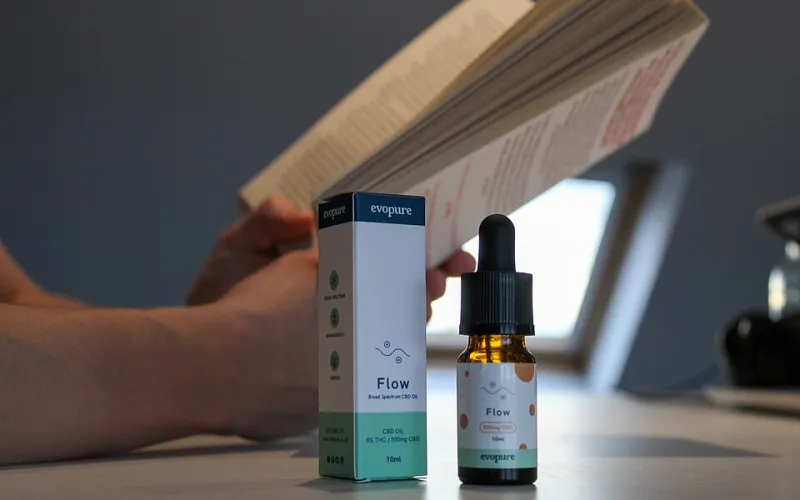
At 9am on Tuesday 20 October 2026, I sent the same email to 20 UK CBD retailers. The email said: 'Hi, I have bought your 10% CBD oil, 10ml. I am new to CBD. How many drops should I take as a starting dose?' No order number. No mention of a medical condition. No hint that I was a journalist. Just a straightforward question that any CBD buyer might ask.
I gave each brand five working days. I tracked response time, accuracy, and whether the reply tried to sell me something before it answered the question. I have anonymised all 20 brands. The point is not to shame a particular shop, but to show what good and bad support looks like when you are standing in your kitchen with a pipette and no clue.
The question that should be easy
A 10% CBD oil contains roughly 100mg of CBD per ml. A 10ml bottle therefore contains around 1000mg. A typical drop is about 0.05ml, so roughly 5mg per drop. A cautious starting dose of 5-10mg is therefore 1-2 drops, not a full dropper.
That is the simple version. The honest version is that drop size varies by pipette, oil thickness and how you squeeze. A good reply explains the method rather than barking a number. It should also ask whether you are on medication, pregnant or breastfeeding, and it should avoid making medical claims. CBD is not a medicine in the UK, and retailers should not pretend otherwise.
Who replied, and how fast
Twelve of the 20 replied within five working days. Eight did not reply at all. The average first response time was 1 day and 4 hours. The fastest was 18 minutes. The slowest was four working days.
Of the 12 replies, seven gave an accurate method and a sensible starting range. Three said 'start low and go slow' without defining low. Two were wrong: one told me to take 10 drops, which is around 50mg, and one told me to take three full droppers, which is a wildly high amount for a first dose.
Nine of the 12 included a product link. Four recommended a stronger oil before answering the dosing question. Three pushed a subscription. One asked for an order number before it would discuss dose at all. That last one is a particular pet hate of mine. If you cannot answer a basic safety question without a sales record, you are not offering support; you are offering admin.
The best three
-
Brand F replied in 18 minutes. It gave the mg-per-drop maths, suggested one drop and a wait, asked about medication, and linked the batch lab report. No upsell. No exclamation marks. Just a clear answer.
-
Brand M replied in two hours. It explained that drop size varies and told me to start with one drop, note the effect, and only increase after a few days. It also said to contact a pharmacist if I was on prescription medication. That is the tone I want.
-
Brand C replied in four hours. It gave an accurate range, offered a phone call with an advisor, and did not push a stronger product. The phone offer felt genuine rather than a scripted funnel.
The worst three
-
Brand T replied after three days with 'take 10 drops'. That is about 50mg, which is not a beginner dose by most standards. It followed up with a 20% off code for a stronger oil. The maths was wrong and the sales pitch arrived before the safety note.
-
Brand H replied the next day telling me to take three full droppers. That is not a starting dose; that is a story with a bad ending. It also included a discount code for a bundle. I would not trust that brand with a batch code, let alone a pipette.
-
Brand Q never replied. It did, however, send three marketing emails in five days. Being ghosted by customer support while being courted by the newsletter is a special kind of modern romance.
The upsell reflex
The most common pattern was not outright bad advice. It was advice wrapped in a sales pitch. Four brands told me to buy a stronger oil before they told me how to use the one I had already bought. Three suggested a subscription before answering the question. One asked for my order number, then sent a cart reminder.
I understand that retail is retail. But there is a difference between a helpful recommendation and using a dosing question as a lead-generation form. If a brand cannot answer the question first, the recommendation is not advice. It is advertising.
What good support looks like
A good dosing reply should do five things. It should give the mg per drop or ml, not just a drop count. It should explain that drop size varies. It should ask about medication, pregnancy or breastfeeding. It should link to a batch-specific lab report. And it should not make medical claims or pressure you to buy a stronger product.
That is a low bar, but only seven of the 12 replies cleared it. Three were vague. Two were actively wrong. Eight brands did not reply at all. If you are spending £30 or £40 on a bottle, you should expect better than a coin toss on basic support.
The bottom line
Customer service is part of the product. If a brand cannot answer a simple dosing email, it is unlikely to help when a batch code is missing from the label or a delivery goes astray. My advice is to send your own test email before you subscribe or buy a large bottle. Ask one clear question. See who replies, how fast, and whether they answer it before they try to sell you something else.
At CBD Zoom we will keep asking awkward questions so you do not have to. If a brand ghosts you, that tells you something. If it answers with maths, a lab report and no hard sell, that tells you something better.