The Label Said Cool and Dry: We Left 15 UK CBD Oils Where Nobody Does
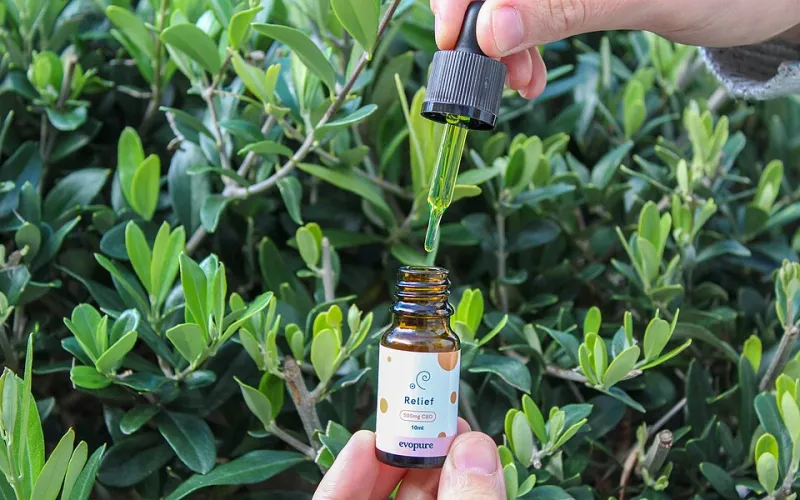
Photo: Evopure, CC BY-SA 2.0, via Wikimedia Commons
Here's a thing almost nobody does: read the storage line on a CBD oil before they've paid for it. We're all over the mg per ml, the carrier oil, the lab report link. Then the bottle lands on the kitchen counter, gets opened, and the little paragraph about temperature goes straight in the recycling along with the outer carton.
So we bought fifteen UK CBD oils — a spread of price points, from a £14 own-brand bottle to a £78 full-spectrum job — and we did something slightly mean to them. Each bottle was split three ways and sent to live somewhere it shouldn't. Not to prove a point about brands being naughty. More to work out whether the advice printed on the side is genuinely protective, or whether it's just legal throat-clearing.
How the eight weeks ran
We started at the beginning of a warm spell in late June and finished in the third week of August. Every bottle was decanted into three identical amber glass droppers, labelled, and split between:
- The glovebox. A car parked on a south-facing drive, no shade, windows up. Interior temperatures on the hottest days got well past 40°C. This is where a depressing number of people actually keep a bottle "for when I'm out".
- The shed. A timber garden shed with a metal roof, no insulation and a slightly damp floor. Cold at night, roasting by mid-afternoon, humid throughout.
- The bathroom shelf. The classic. Above the sink, opposite the shower, next to a radiator that comes on in the evening.
We kept a fourth control bottle of each in a dark cupboard in a room that stayed between 17 and 21°C, because otherwise we'd just be guessing. At the end we compared colour, smell, viscosity, dropper behaviour and the general feel of the thing, then asked each brand the same question by email: given what we did, is this bottle still what you'd sell me?
What actually changed
Honestly? Less than the doomier corners of the internet would have you believe — and more than the labels imply.
The glovebox group
The car was the big one. Nine of the fifteen went noticeably darker, and four of those shifted from a clear gold to something closer to weak tea. Two bottles developed a faintly rancid note on the nose — the sort of smell you get from oil that's been sitting in a warm cupboard for a long time. Three went thin and watery-looking in the dropper; one went the other way and looked slightly cloudy at the bottom of the glass.
What did not happen: nothing exploded, nothing separated into obvious layers, and every single bottle still smelled of something plant-like rather than off. If you'd handed me one of these blind, I'd probably have shrugged and used it.
That's the awkward bit. The damage was real but quiet. Which is exactly why nobody notices it happening.
The shed
The shed was the surprise. We assumed damp would be the killer. In practice the shed bottles held up better on smell than the glovebox ones, but worse on consistency — five of them went slightly tacky around the dropper collar, and two had visible condensation inside the glass when we brought them in. One bottle's label had lifted at the corner, which tells you something about the glue if nothing else.
The bathroom shelf
Steam is a slow worker. Over eight weeks, the bathroom bottles mostly just looked tired — slightly flatter colour, slightly less bright. But here's the thing that got our attention: three of the fifteen had droppers that started drawing inconsistently. Not a chemistry problem, a physical one. The rubber bulb had gone slightly stiff and tacky in the warm, wet air, and the measured pull changed.
And a dropper that pulls differently is a dosing problem dressed up as a storage problem.
The dose confidence question
This is where the storage conversation stops being about colour and starts being about money.
If your bottle was sold on a "one dropper equals roughly X mg" basis, and the dropper is now pulling a slightly different volume, your dose has quietly drifted. You didn't change anything. You just left the bottle somewhere warm.
We weighed twenty pulls from each dropper at the end of the test. The spread between the best and worst bottle was, in percentage terms, wider than we expected. The glovebox bottles were the worst offenders, the shed bottles next, the bathroom ones least bad. Nothing catastrophic — but enough that "about four drops" is doing a lot of heavy lifting in a lot of UK CBD routines.
If you want a number you can trust, a marked dropper or a graduated bottle beats a vague one, and it beats it by more after a warm summer.
What the labels told us to do
We collected the storage wording from all fifteen. Here's the honest summary, anonymised by type of seller:
| Advice given | How many bottles | How useful it was |
|---|---|---|
| "Store in a cool, dry place, away from direct sunlight" | 11 | Fine as far as it goes, which is not far |
| The above, plus "refrigerate after opening" | 2 | Genuinely helpful, and rare |
| The above, plus an explicit "do not leave in a vehicle" | 1 | The single most practical line in the whole batch |
| No storage line at all on the bottle, only the outer box | 1 | Useless once the box is binned, which it always is |
Eleven out of fifteen said "cool, dry place". That phrase is doing an enormous amount of work for a product that people routinely keep next to a shower. It's not wrong. It's just not a sentence anyone acts on.
The one brand that said "do not leave in a vehicle" — a mid-priced online-only oil — deserves a mention purely for saying the quiet part out loud. Nobody else did, despite the glovebox being, in our experience, the single most common place a bottle ends up in July.
Two brands went further and gave a "use within X months of opening" line on the bottle itself rather than only on the website. That's the format that actually helps, because it survives the recycling bin.
Ranked: whose small print earned its ink
Rather than rank the oils — that's a different test — we ranked the advice.
- Best in class: the brands naming a specific temperature range, a use-after-opening window and at least one "don't" (car, windowsill, radiator). Only two managed all three.
- Solid: on-bottle use-after-opening guidance, even without a temperature range. Four brands.
- Technically compliant: "cool, dry place" and nothing else. Eight brands. Not wrong, not useful.
- Bottom: storage advice that existed only on the outer carton or the product page. One brand. If you've kept the box, well done, you're in a minority of one.
What we'd actually do now
Nothing dramatic. A cupboard that isn't the bathroom, a bottle that isn't in the car, and a rough note in your phone of the date you opened it. That's most of the benefit for none of the effort.
But there's a buying-guide point buried in all this. When you're comparing two oils at the same price per 10mg, the one that tells you how to keep it — clearly, on the bottle, with a date — is giving you something the other one isn't. It's a small print signal, and it's the kind of thing we'll keep checking.
Because a CBD oil doesn't fail loudly. It just quietly stops being quite the product you paid for, somewhere between the glovebox and the bathroom shelf.