The Red Sticker Has a Memory Problem: 90 Days of UK CBD Oil Prices, Checked
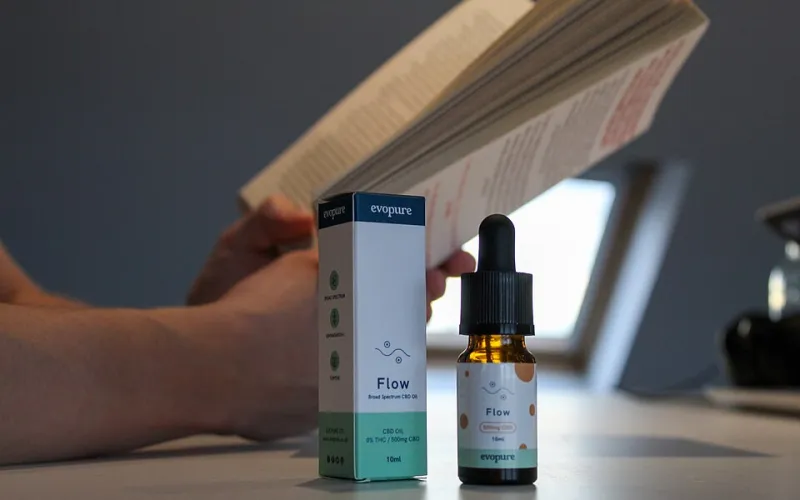
Photo: Evopure, CC BY-SA 2.0, via Wikimedia Commons
Black Friday pages have a way of making a £38 bottle look like a public service. In mid-November 2026, UK CBD shelves — physical and digital — are filling up with red stickers, countdown timers and ‘was’ prices that seem to have been plucked from a different economic climate. So we did the unglamorous thing: we kept a spreadsheet.
What we tracked, and what we ignored
From the last week of August 2026 to the second week of November, we checked 25 CBD oils sold by UK retailers once a week. We recorded the advertised price, bottle size, total CBD in milligrams, and any subscription or multibuy price only when it was shown without a code. We ignored voucher codes, one-day flash sales and loyalty points. Across 13 weeks that gave us just over 300 price points.
For each oil we calculated cost per 10mg of CBD. This is the only number that lets a 10ml bottle and a 30ml bottle have a fair argument. It also strips out the theatre of ‘high strength’ badges and percentage discounts. A bottle can be cheap and still be poor value. A bottle can be expensive and still be the sensible buy. The per-10mg figure doesn’t care about the font on the label.
Pattern one: the honest dip
Six oils had a lower listed price in mid-November than in late August before any Black Friday badge appeared. The reductions were modest — often 8% to 15% — but they were visible in the data. When the sale page said ‘was £34.99, now £29.99’, the £34.99 was a price we had actually seen on the site during the tracking window.
That matters. A genuine reference price is not proof of a good deal, but it is proof that the retailer is not inventing the starting point. One oil in this group went from 24p per 10mg in August to 21p in November. Another moved from 31p to 27p. Neither is a dramatic saving. Both are real.
Pattern two: the price that never was
Nine oils carried a ‘was’ figure in November that never appeared in our weekly checks. Not once. It wasn’t a price from August, September or October 2026. It may have been a pre-pandemic memory, a different bottle size, or a number someone found in a drawer. We can only report what we saw, but the pattern was consistent: the bigger the claimed discount, the less likely the reference price was to show up in our notes.
One product advertised ‘up to 40% off’ against a ‘was’ price of £49.99. During our 90 days, the highest listed price we recorded was £36.50. The Black Friday price was £33. That is still a small saving on the recent price, but the 40% figure is doing a lot of work with very little evidence.
Pattern three: the bottle-size shuffle
This was the most common trick, and the easiest to miss. Several products changed pack size during the 90 days. A 30ml bottle became 20ml. A 10ml became 8ml. One ‘value’ pack added a second 10ml bottle but raised the price by more than the extra oil was worth.
If you only looked at the headline price, the deal looked fine. If you looked at cost per 10mg, it wasn’t. One oil moved from £32 for 30ml containing 1,500mg to £29 for 20ml containing 1,000mg. Headline: about 9% cheaper. Cost per 10mg: from 21p to 29p. That is not a Black Friday deal. It’s a smaller bottle with better lighting.
Another brand advertised 30% off, but the discount applied to a 10ml bottle while the 30ml stayed at full price. Per 10mg, the 30ml was still the cheaper way to buy. The red sticker was pointing at the wrong bottle.
The maths that survives a red sticker
The useful question is not ‘how much is off?’ It is ‘what does 10mg cost me now, and what did it cost me last month?’ That is the comparison CBD Zoom is built around: less theatre, more per-milligram arithmetic.
Take one example from our tracking. A 10ml oil with 500mg of CBD at £24.99 works out at 50p per 10mg. A 30ml oil with 1,500mg at £59.99 works out at 40p per 10mg. The second bottle has the bigger price tag and the better value. If Black Friday knocks 15% off the first bottle and nothing off the second, the first becomes about 42p per 10mg. The gap narrows, but the bigger bottle still wins. That is the sort of thing a ‘was’ price will never tell you.
A pre-discount checklist for Friday
Before you buy any CBD oil in a Black Friday sale, run these checks:
- Find the total CBD in milligrams. Not the percentage. Not the ‘extra strength’ badge. The milligrams.
- Do the sum: price divided by total milligrams, then multiply by 10. That is your cost per 10mg.
- Check the pack size against your last order. If the bottle has shrunk, the discount may be smaller than it looks.
- Ask when the ‘was’ price was last live. If the retailer cannot show it, treat it as decoration.
- Compare like with like: same strength, same size, same format.
- Ignore percentage off. Compare cost per 10mg across at least two products.
- Check the subscription price over 90 days, not just the first month.
- Add delivery and returns to the total. A cheap bottle with a £4.95 delivery is not always cheap.
The bottom line
A real Black Friday deal is boring. It survives a calculator. It survives a bottle-size check. It survives a look back at what the price was in September 2026. If a deal only works when you forget that the bottle got smaller, or when you accept a ‘was’ price that never appeared on the shelf, it is not a deal. It is a red sticker with a memory problem.
Our 90 days of tracking did not find a single miracle. We found modest reductions, inflated reference prices and a lot of pack-size gymnastics. That is useful. It means you can shop the sales without trusting the sales page. Zoom in on the cost per 10mg, and the rest is just marketing.